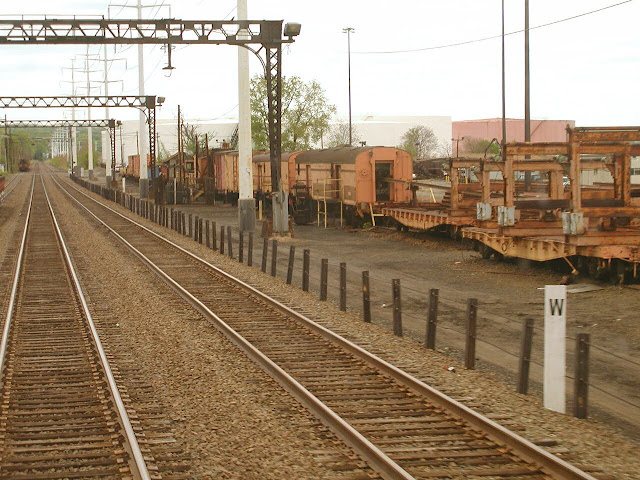
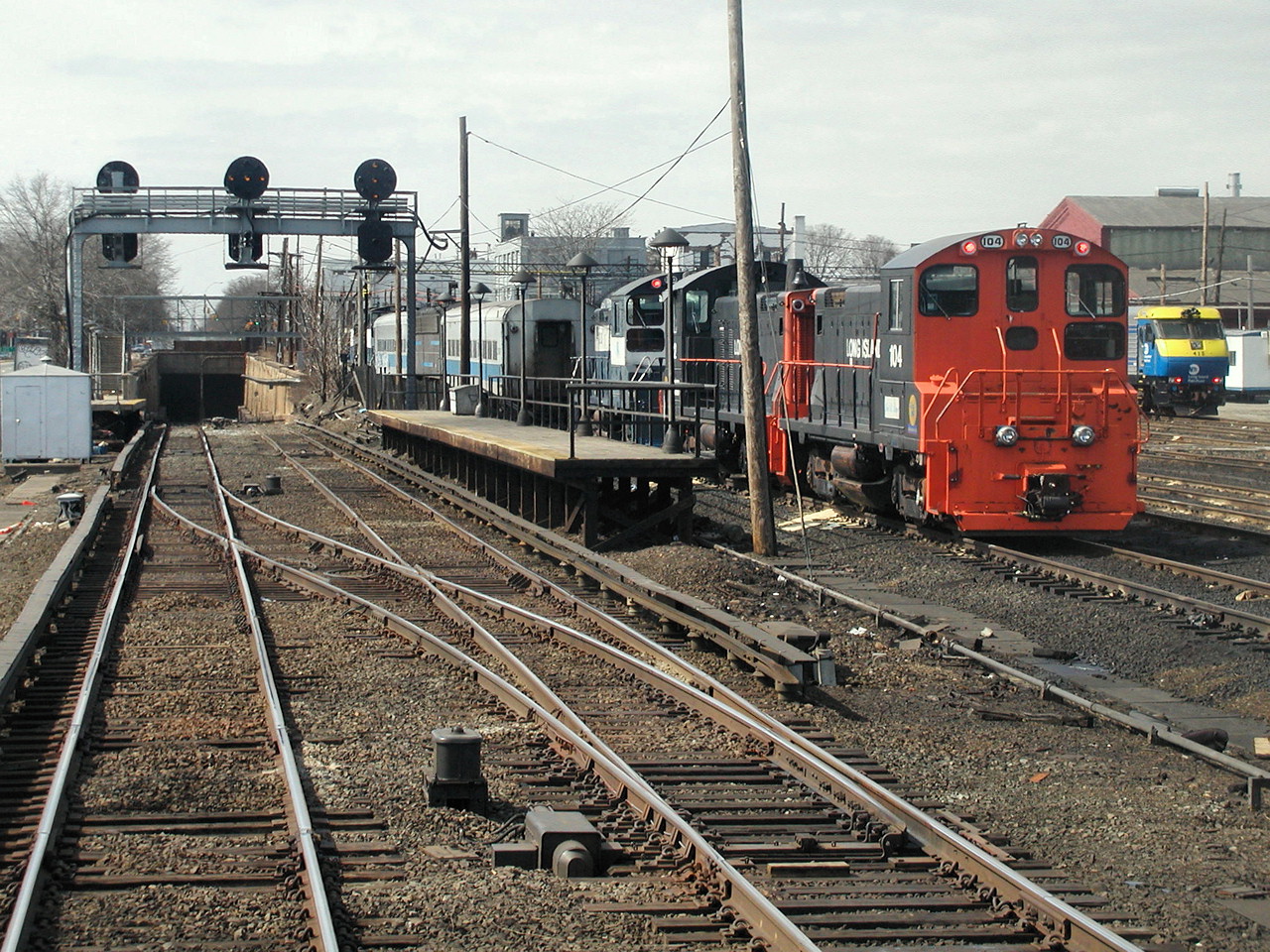
Less than a year after my first digital camera purchase I scored a photographic coup with a visit to the iconic Lackawanna Cutoff Paulinskill viaduct in northern New Jersey. Today the 1,100 feet long reinforced concrete viaduct is well known in both rail and exploration circles, but in 2002 the abandoned bridge was only documented by a handful of low resolution photos on Web 1.0 enthusiast websites. This was not even my first visit to the structure as a Pocono skiing activity had brought me to the area each February for the better part of a decade. On one trip in particular I even took what would become my senior yearbook photo on the bridge arch. Anyway, in 2003 with the skiing complete and my new digital camera in hand, I returned to the bridge for some proper documentation. the resulting set of photos ( mirror ) also include those taken on the Amtrak trip to Philly before the ski weekend and other Lackawanna Cutoff photos in addition to the viaduct.
Beginning my trip at Meriden, CT, the cab car leading the Springfield Shuttle was former Metroliner #9643 in Phase III heritage paint and the diaphragm style end door that would be eventually covered over with sheet metal.


Power for my shuttle train was Phase IV heritage painted P40DC #816.
Here we see Metro North M2 MU #8462 with the future Church St bridge truss being assembled in the background.
Passing the Newark International Airport rail station a new NJT Comet V cab
car sits at the eastbound Platform while an airport monorail departs
the station.
Trenton's recently painted FAIR tower was still looking spiffy.
The full Cutoff had been purchased by the State just two years earlier
in 2001 from two land developers who once had plans to mine the right of
way for construction fill. Since Conrail had lifted the rails in 1984,
the absentee owners had allowed the 26 mile long railway to become a
wooded track for ATV's and 4x4 SUV's and pickups. Here we are looking
westbound along the deck of the bridge with the vehicle track down the
center and the ties from the previously active single track on the left.
On a previous visit to the
Pequest Fill,
I randomly encountered an Erie Lackawanna painted pickup truck with a
locomotive horn on the roof, slowly driving down the track.
The practical rationale for the viaduct and the larger cutoff was
simple. It would be 11 miles shorter than the old main line and
eliminate 42 cutes with half the ruling gradient. However what allowed
the DL&W to build what was effectively the world's first HSR capable
right of way was the insane amounts of money that was made transporting
high value anthracite coal between the miles and the New York metro
area. Before the availability of oil and natural gas after World War 2,
anthracite was the best way to heat a "modern" household with a minimum
of fuss and smoke. this gave railroads like the Lackawanna and Reading
the cash to build their impressive infrastructure. Looking southward 115
feet above the Paulenskill creek, the white line to the left marks the
old NYS&W main line to the Pennsylvania Anthracite Coal region.

The party piece of the viaduct is the ability for explorers to get onto
an inspection walkway that run the length of the bridge via bridge deck
manholes above the center of each arch.
The walkway runs on top of the main load bearing arches via passages
built through each upright support and the arch abutments. When the
cutoff was built between 1908 and 1911, reinforced concrete was a brand
new high tech wonder material and the Paulinskill viaduct was the
largest reinforced concrete structure in the world up to that time. The
lack of cost optimization in the batch processes combined with the
DL&W's deep pockets allowed for concrete of exceptional good
quality. This and similar structures will likely be pressed back into
service for the planned Amtrak service to Scranton despite a half
century of neglect.
Elaborate murals were already beginning to cover cover the archways, a process that only
accelerated
with the later invention of social media and web video. The resulting
popularity of the viaduct for explorers and artists has increased the
risk of law enforcement mostly related to parking on the local road
under the bridge.
The piers between the arches were actually hollow chambers. Most were
filled only with a bit of debris, while others had pools of water which
were fortunately frozen solid at this time of year.