It was going to be difficult running the 20th iteration of the SEPTA Mid-Winter Trip as the COVID 19 pandemic had only only caused massive cuts to transit schedules, but also made spending the better part of a day riding around in enclosed transit vehicles. While the two most common solutions would be to either cancel the event entirely or ignore the threat of getting sick (and passing it to others), I turned the situation into an opportunity and converted the SEPTA Mid-Winter Transit Trip into a walking tour of Philadelphia rail infrastructure. Starting at the same Market East location as usual the trip would wander around the former Reading Viaduct and City Branch before heading to 30th St Station, hiking the ARSENAL loop through University City before ending with a stroll along the Schuylkill river walk and Suburban Station approach. Although only 5 people turned out for what turned out to be a brisk 8 mile walk in surprisingly warm weather, everyone had a great time and we were able to cover a lot of interesting territory not generally available to the Mid-Winter Trip in normal years. You can view the entire set of photos here ( mirror ).
In normal years I would start at Lindenwold in order to catch one of the handful of express PATCO trains, but with the express services cancelled I just started at Woodcrest Station. My inbound train was led by PATCO #1009 with #1042 bringing up the rear.


For the folks who spend their Philly time in and around Market Street,
Convention Center or Central Business District, they might not realize
how the old Reading line to its downtown stub end terminal was just
abandoned in place in 1984 after the station closed. Subsequent
redevelopment pushed back the end of the old viaduct to just north of
the Vine Street expressway.
The Reading viaduct was ostensibly constructed around 1890, but as it
was modified over the years it developed a bit of a Ship of Theseus
feel.
The Viaduct is currently owned by the Reading Entertainment Company, the
corporate successor to the Reading Railroad after its 1970's
Bankruptcy. Reading Entertainment gets its name from a chain of 12
motion picture theaters that it owns in addition to a hodge-podge of
real estate assets. The company has been engaged in a standoff with the
city over the development of the Reading Viaduct into a linear park.
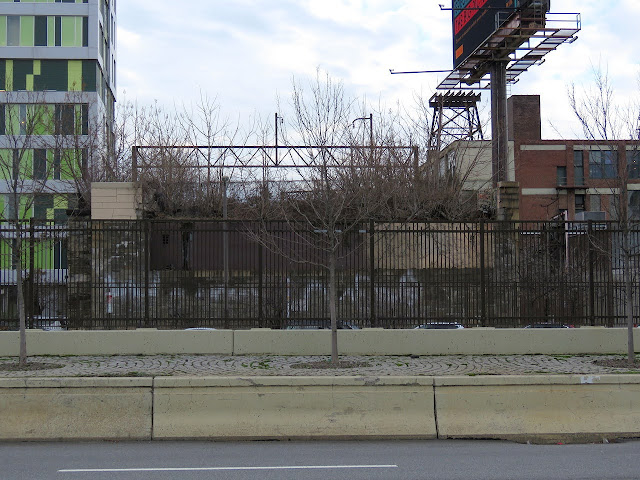
One casualty in the battle was the old Spring Garden Street Station's
northbound passenger headhouse and platforms. Neglected for years, a
local preservation group used an anti-blight law to sue Reading
Entertainment to clean up / restore the old headhouse and platforms.
Reading Entertainment choose the other option available to them,
complete demolition and clearance of the site. After a court battle the
structure in the photo was demolished in August 2021. Of course in
December 2020 there was no way to know that would happen and therefore I
only have this one photo of the building.
The real Reading Spring Garden St station building is across the tracks and has already been converted into apartments.
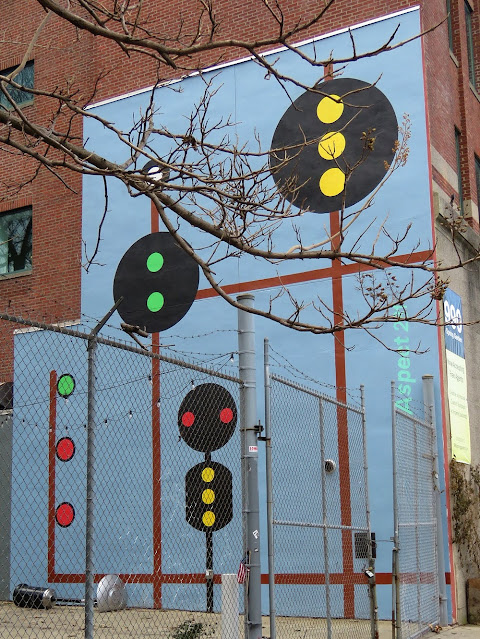
This area is seeing significant gentrification with one building
branding itself "Aspect 281" in a serious case of cultural
appropriation. Developers know that the Philly Hi-Line park is
inevitable and are getting in on the action.
Arguably Philly's most famous closed subway station, Spring Garden on
the Broad Ridge Spur retains some of is above ground structures.